Farm Gates & Ranch Entrances in Lawton, OK
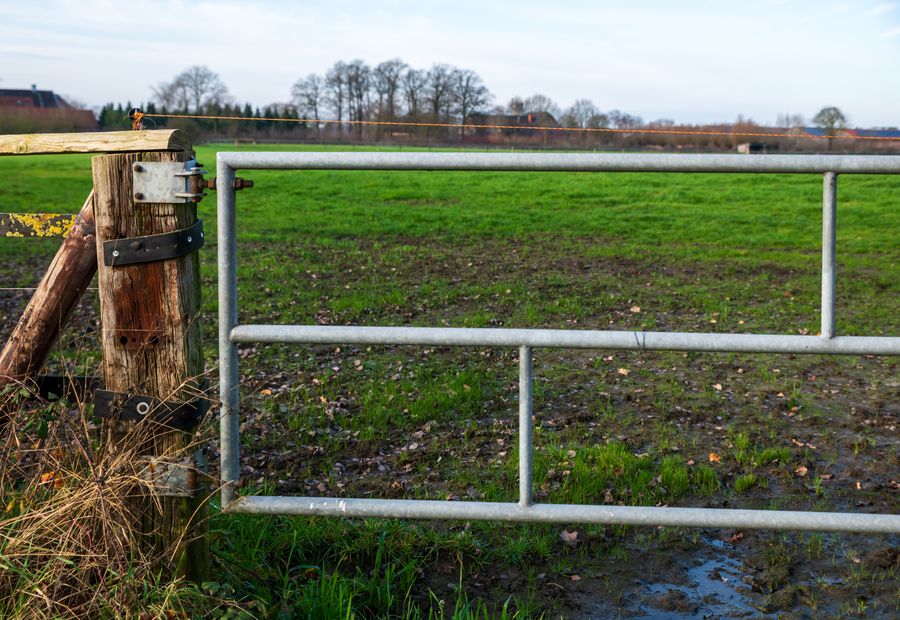
Lawton Farm Fence sets farm gates, walk gates, cattle guards, and welded ranch entrances across Comanche, Cotton, Grady, Stephens, and Kiowa counties, from acreages outside Lawton to working ranches near Sterling, Fletcher, and Walters. A gate is the piece of a fence that moves, so it is the piece that wears out first.
The hinge post carries everything. Ours goes in deeper than any line post on the place, eight inches across or heavier in pipe, four feet down, and braced back into the fence line with a horizontal rail and a twisted diagonal wire so the pull of the gate transfers into the run instead of tipping the post. Wood hinge posts get tamped backfill. Pipe hinge posts get concrete, which belongs under steel and rots wood at the collar. Gates come from Priefert, Powder River, and Tarter in powder coated tube, sized to the opening, and we weld custom pipe gates when the opening is odd or the client wants the entrance to match a run of continuous rail. A gate hung on the corner post of a fence, with nothing bracing it, pulls that corner out of plumb and takes the fence line with it.
Entrances That Read from the Road
An entrance header is the one piece of fence work that everybody driving by will see. We build them from pipe, welded on site so the uprights sit plumb and the crossbar runs level over a driveway that probably does not. Uprights get real footings, because a header catches wind like a sail and a shallow upright leans within a year. Ranch name and brand panels get cut and welded into the crossbar rather than bolted on.
Cattle Guards and Gate Placement
Oklahoma law makes the livestock owner responsible for keeping stock restrained, and an open gate is the usual way that goes wrong. A cattle guard removes the human step at the entrances people use every day. We set the guard on a proper base with drainage under the pit, wings on both sides tied into the fence, and a swing gate alongside for horses and livestock that will not cross a guard. Where a gate opens onto a county road we set it back far enough that a truck and trailer can pull clear of traffic while somebody works the latch.
Call for a Quote
A gate can go in on its own or as part of a new line. Reach us at (580) 555-0139.
Why does my gate drag on the ground?
The hinge post moved. A gate hangs off one post and levers against it every time it swings, and the load is worst on a wide gate that people leave open in the wind. Shimming the hinges buys a few months. The fix is resetting the hinge post deeper, bracing it back into the fence line, and rehanging the gate square.
What width gate should I put in?
Twelve feet handles a pickup and a stock trailer and is the common choice for a pasture opening. Sixteen feet lets a tractor with an implement through without a second thought. Field entrances that see a combine or a hay truck want twenty feet or a pair of gates meeting in the middle. Add a small walk gate beside the main one so nobody swings a heavy gate to check water.
Do cattle guards need a footing?
Yes, and that is where they fail. A guard sits on a poured or set base at each end, below grade, with drainage under the pit so it does not silt up. Set on packed dirt, one end settles, the guard tilts, and the rails start to spread. The base has to carry whatever the heaviest truck on the place weighs, not the average one.
Which gate hardware holds up outdoors?
Galvanized or powder coated hinges and latches, sized past the gate rather than to it. We hang tube gates on bolt-through hinges into the post, not lag screws into end grain. Chain and a snap will hold a gate closed. A cow will work a plain drop latch open with her nose, so pens get a two-way latch she cannot lift.