Board & Rail Fence in Lawton, OK
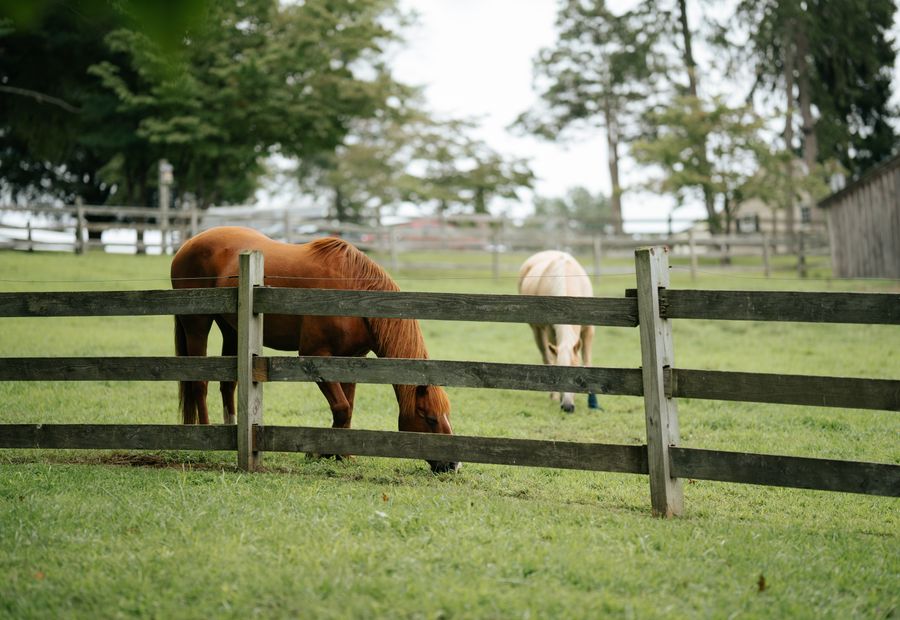
Lawton Farm Fence builds board and rail fence for horse paddocks, arena perimeters, and acreage frontage around Lawton, Cache, Elgin, and Medicine Park. Board is the smaller part of what gets built in ranch country here, and it goes up on horse places, show barns, and the acreages spreading out from town rather than across open cattle pasture.
Posts are the fence. We set five to six inch treated posts on eight foot centers so each board spans post to post with no splice hanging in the middle, and corners and gate posts go deeper with a full brace behind them. Boards run one inch by six on three or four rails, rough sawn oak or CCA ground contact treated pine, fastened with ring shank nails or screws into the face of the post rather than butted and toe nailed. Rails go on the inside of the posts on horse fence, so a horse leaning into the line pushes the board against the post instead of pulling the fasteners out. Boards nailed to posts sunk two feet in red clay will look right for one season and start racking the next, because a rail fence carries wind load and a shallow post has nothing to resist it with.
Acreages Under the Wichitas
The small places north and west of Lawton, out toward Medicine Park and the refuge road, are where board fence sells. Buyers there want the fence to read from the county road, and the ground is friendlier to it than the open range is. That country still turns up granite, and a post hole that hits rock gets drilled properly rather than shortened. Red clay holds a tamped post well and lets us reset one later if the line ever moves.
Paint, Stain, and Upkeep
Sun does more damage to a board fence in this part of Oklahoma than water does. We stain or paint on all four sides before the boards go up, including the cut ends, since an unsealed end grain drinks moisture and checks first. White paint is the classic look and the highest maintenance. A dark oil stain hides dust off a gravel road and needs recoating less often.
Estimates
Board runs at the top end of the per foot range with pipe, mostly because of the post count. Call (580) 555-0139 and we will lay out the paddock before pricing it.
Three board or four board for horses?
Four board makes a taller, tighter fence and is the usual choice for stallions, weanlings, and any paddock where horses are turned out hot. Three board suits quiet pasture horses and costs noticeably less per foot. The bottom gap is the deciding detail. Four board closes it down enough that a foal cannot roll under.
Should board fence have wire mesh behind it?
For foaling paddocks and small turnouts, yes. A board fence stops a horse that respects it and a mesh backing stops the leg that goes through anyway. We run no-climb woven mesh on the pasture side, behind the boards, so the horse contacts wood first. On open pasture with mature horses the mesh is usually not worth the cost.
Oak or treated pine boards?
Rough sawn oak is stiffer and takes a kick better, and it will hold a nail through a hot Oklahoma summer without cupping much. Treated pine costs less, takes paint and stain more evenly, and lasts well if it is rated for the exposure. Oak on the impact rails and treated pine everywhere else is a common split.
Why do horses need a fence they can see?
A horse at a gallop does not see plain wire until it is in the wire. Board fence gives a solid visual line at speed, which is the whole reason the style exists. That is also why we cap wire horse fence with a top board or a strand of coated wire, so the top of the fence reads as a line from across the paddock.